Tuesday, March 20

Travel Notes from Sri Lanka | Day 1: Arrival

Sishir Chang recently spent 5 days in Sri Lanka. His travel notes are reproduced here: raw, unedited, and uncut. One post for each day.

Day 1: Arrival
I arrived at about 5 PM local time after flying Lanka Air. The flight was OK although I wished I had a window seat to be able to check out Sri Lanka from the air. As it was I got some glimpses of the landscape below that looked interesting especially the central mountain range which while no Rockies or Sierras were larger than I expected and were mysteriously shrouded in cloud. The airport and much of Sri Lanka seems less developed than most places I've been in Asia. The capital of Colombo doesn't seem to possess the size of many other Asian cities and there doesn't seem to be a big modern commercial district. Most of the urban areas look like most other Asian Third World towns with rather narrow streets with small shops and stalls lining them and 3 wheeled tuk tuks on them. Driving in Sri Lanka is an adventure best left to skilled locals as it is in many developing countries. I'm amazed that like China I haven't seen many automobile accidents or even cars with scratches even though cars drive on the wrong side of the road regularly and cram by each other with less than inches to spare.

For the first full day in Sri Lanka I spent mostly in Colombo the capital. First getting a sim card for my cell phone, which appears to be the primary means of communication here, then checking internet and seeing some sights. Internet access is something that back in the US I take for granted but here in Sri Lanka I've been treating it as an almost precious commodity as there don't seem to be many Internet cafés and wi-fi networks almost nonexistent.


My driver dropped me off at a relatively modern shopping mall where he said there was an internet café. Unfortunately the mall didn't open for about an hour so I waited outside. While I was waiting an almost continuous stream of devout Muslims walked by. This was strange to see this as Sri Lanka is a predominately Buddhist society, with a large Hindu minority while the Muslim community vies with the Christian community for third place in size. Yet here in Colombo was a continuous stream of white clad bearded Muslim men wearing tight fitting hats of the kind commonly worn by SE Asian Muslims along with women in white or light colored hijabs toting along small children also white colored but wearing fanciful tight fitting silver hats. I'm not sure where they were going or what they were doing but I had the feeling there might've been a religious festival of sorts.


With the working sim card in hand and email having been checked my day was relatively free so I settled on lunch. My driver took me to an upscale buffet restaurant with a sea view where I had an excellent lunch of Sri Lankan food. I invited my driver to eat which I'm sure isn't standard practice as he seemed relatively surprised to join me but I felt it was a good gesture and as that he could also give me some information about what I food I was eating. Had a meal of a few kinds of rice including a red kind that is popular in Sri Lanka, several kinds of curries and a few types of sambols (spicy sauces) some of which were thick and chunky like chutneys while others were almost like coleslaw. Dessert was a mix of custards, bread pudding, jellies, fruit and something that seemed exactly like a marshmallow.

Other than the food and the view the amount of security precautions at the restaurant stood out. Driving up to the building the car was examined with a mirror underneath and the trunk examined along with the drivers ID. After getting off the elevator we had to walk through a metal detector and have our bags searched. No doubt this level of security was due to the threat of terrorism from the Tamil Tigers and throughout Colombo there were reminders that an active conflict was ongoing with Kalashnikov wielding troops a common sight along with checkpoints.


After we ate, my driver took me to a see another hotel and visit the beach. The hotel was a fairly elegant European style hotel and the beach was decent although relatively deserted. I hiked a bit down the beach and a few hundred yards away the hotel property gave way to a fishing village. It somewhat surprised me that there would be a ramshackle fishing village right against a luxury hotel and also that such a ramshackle fishing village would still be in the middle of a major city. I was invited by a resident of the village to come and see it and he showed me around. The village was fairly small and mostly consisted of single story shacks made of a variety of materials. Running in the back of the village was the coastal railway that had been hit by the tsunami but since then had been fixed so the village was sandwiched on a narrow stretch between the railway and the sea. My host fetched a coconut from a tree and cut it open for me to drink from. Even though I've been to tropical places several times before had fresh coconut I had never had one plucked and cut from a tree right before me. The water within the coconut was warm and not quite refreshing but unlike the processed coconut that we're accustomed to it wasn't very sweet and even slightly salty. Not bad but not quite the thing on a very hot day. The villager also told me that the tsunami had hit the village and that the government had wanted them to move but had not done anything to enforce that order so they went ahead and rebuilt on the same location. As I left the villager made an appeal for some money for his family. I didn't give him the 1,000 Rupees he wanted but he settled for the 300 I did. I had figured he was going to ask me for some money and appreciated the tour and coconut but even 1,000 Rupees (a bit more than $10) is tight when traveling on a budget.


We next briefly stopped at a Hindu temple where they didn't let us enter for pictures and then went on to a small Buddhist temple. This temple was unlike most Buddhist temples I had been too and was octagonal in layout with brightly colored statuary dioramas depicting the Buddha and important events in the Buddha's life along with Buddhism relating to Sri Lanka.

Saturday, February 24

Tsunami Recovery in Thailand | Parts 11 & 12: ONGOING NEEDS & LEAVING PHUKET

(Parts 11 & 12 of a 12 part series)

Five weeks after the Tsunami hit, Sishir Chang went to Thailand to see how the people there were recovering and to see how those concerned could help. The following segments are the final chapters of his first experience in the aftermath of one of the world's most devastating natural disasters. Originally published in the Southasian, the article is being republished here with the author's permission.
___

Part 11 | Ongoing Needs

From everyone I talked to and seeing for myself the recovery is going very well. There are some places much more damaged than others where it will take a long time to recover but in general reconstruction is progressing well. Almost all of the bodies have been recovered but there are still around a 1,000 still missing and also around a 1,000 bodies still waiting to be identified. There hasn’t been any major health threat from the tsunami and from what I found there is plenty of food, water and medicine available.

In the worst hit areas of Khao Lak and Bang Niang the most pressing need is housing as there are still a few hundred Thais living in refugee camps in that areas. Mental health specialists are also needed to help with the children and adults who are suffering post traumatic stress. According to Sophie Konnaris at the Tsunami Volunteer Center in Khao Lak how much mental health help is needed is difficult to determine because to her knowledge no major mental health evaluation had been done. Another problem that I heard from aid workers is that Western mental health specialist might not be able to help due to language and culture differences.

Also in Khao Lak many resorts were completely destroyed it will be a long time before they can be reconstructed, if ever, and open for business. Job retraining and other economic development is needed. The villagers of Bang Niang were primarily fisherman and they would like to replace the boats they lost in the tsunami to resume fishing and would like power tools to help with fixing boats and building houses.

In Patong and Kamala the biggest need is economic recovery in the form of tourists coming back. In Kamala there is still some need for housing but reconstruction is progressing both for houses and businesses. At both the Kamala health station and the Patong hospital they said that they were well stocked on medicines but still had a need to replace equipment.

Overall the message that I heard from everyone was to come visit and enjoy Phuket. Without tourism the Thais have no chance of economic recovery.

Part 12 | Leaving Phuket

As I was leaving I watched the sun set through the windows of the Phuket airport. Like every other sunset I had seen in Phuket this one was beautiful. I had come as a concerned American looking to see where my aid money was going and also out of curiosity to see the aftermath of one of the worst disasters in human history. As I watched the sun go down I was still trying to comprehend all that I had seen and heard. I had been expecting something simple, survivors and aid workers nobly struggling amidst ruins to save life and restore dignity, but had found a far more complex situation of ad hoc aid, sex tourism, tsunami commercialization, frustration and reconstruction. All of those thoughts mingled in my mind as I watched another day end in paradise.
___

This concludes Shishir's experience in Thailand. Sishir has recently returned from Sri Lanka, where he observed a country still rebuilding, over a year after the same tsunami. BLYGAD is happy to announce a new series from Sishir: "Travel Notes from Sri Lanka", to be posted in 5 segments. Stay tuned.

Thursday, February 22

Friday Photography | Imaginary High-rise Landscapes

Almost a month with out a post? Criminal!

Truth be told, the AFHMNers have been busy: A community center in Sri Lanka nearing completion, a new project on the books (this one in the congo), a sleeping bag drive for our local homeless, and finally, a very exciting project that has been to blame for my absence on BLYGAD... but more on that later.

All of this recent activity means that BLYGAD has it's work cut out for it. I'll be reporting on the above projects, posting a new Sri Lankan travel diary from Sishir, keeping you up to date on all things humanitarian & architectural, and keeping good on that promise to freshen up the look of the place... hmmm, that's curious, rumor has it AFH International might be doing the same very soon...

In the mean time, enjoy these shots of Russian housing projects. (Thanks for the tip Jeffrey!) If anybody knows more about these curious neighborhoods, please leave a comment!


Happy Friday!

5 Things Meme

It’s a mashup of the icebreaker games that everybody hates, the old playground standby tag, and the chain letter… and it could only happen in the blogosphere. It’s the 5 Things Meme.

Paul Schmelzer, author of the always excellent Eyeteeth, has tagged BLYGAD (way back here) and who am I to break the chain? I’m supposed to reveal five things you don't necessarily know about me, and then tag five others who should do the same. In this case, the whole AFHMN gang will be getting in on the fun.

So without further ado: 5 things you probably don’t know about AFHMN

1. The first AFH seeds were planted in Minnesota soil in 2005 as Cameron Sinclair came to talk at the College of Architecture and Landscape Architecture at the University of Minnesota (which is now the more inclusive College of Design). The speech Cameron gave then was not so different from the one he gave at the TED Talks last year:


2. In fact, so many were inspired by that talk, the University somehow managed to convince Cameron to come back to Minnesota and find the time to teach a studio. This kick-started a new push, led by Dean Tom Fisher, to position the school as a leader in humanitarian architecture.

3. No grassroots organization is without its growing pains. As we recently made the transition to using Google Groups, we accidentally added our whole mailing list, 140 blessed souls in all, to our “working group”. Needless to say, many of them politely (in most cases) objected to being included in one morning’s nuts and bolts conversation (18 emails deep) about where we should hold the next meeting.

4. AFHMNers have day jobs, imagine that! Check 'em out on the web: Cermak Rhoades Architects, LHB, Swainhart Construction Services, Shelter Architecture, SmithGroup, & Perkins & Will... among others!

5. I’ve successfully gone a full year without using the word blogosphere, on this site or anywhere… until today. Thanks Paul.

And to keep the ball rolling, I tag:
Up Your Architecture
CRA Jotter (with just a smidgen of self promotion)
A Life Without Buildings
Vestal Design Blog
A Daily Dose of Architecture

Have fun!

Friday, January 26

Friday Photography | Bill Sullivan


Bill Sullivan creates situational photography. He started by creating a set of rules for himself:

1. The image or photograph must be candid
2. The context of the situation must be clearly established
3. The background behind every subject in a series must be the same
4. The photographer must always be visible to the subject(s) in the photograph
5. The moments the images are to be taken must be defined before the pictures are taken
6. Secondary image(s) can be attached to the primary image if needed to clarify an established context
7. The camera should not play a visible role in the situation unless its visible presence has a role in that scenario


He has created 3 scenarios thus far...

... one in the NYC Metro:


... one in an elevator lobby:


... and one in Times Square:

[Via Archinect]

Happy Friday!

Sunday, January 21

Umoja: American Shantytown

It's resident's call it Umoja, the Swahili word for "unity" / the city of Miami calls it an illegal eyesore. Brainchild of activist Max Rameau, Umoja is part protest and part experiment. It's existence is a response to the growing housing crisis in Miami. A recent New York Times article reports that the Miami-Dade County planning department estimates Miami will need 294,200 new housing units by 2025, 42 percent of them for 'very low- or low-income households.

The shantytown has successfully fought for the right to exist using a 1998 federal district court ruling that says Miami can not criminalize homeless people for conducting “life-sustaining acts” including eating, sleeping, lighting a fire and building temporary structures on public land if local shelters were filled. Max keeps a blog documenting the project called Take Back the Land.


The small plot of public land is located in Liberty City, a neighborhood of Miami. The video below shows a makeshift city made up of about 16 structures. About 40 formerly homeless people call this place home. At Umoja they are off the streets; sleeping under a roof, cooking and eating with their neighbors, and taking care of each other when sick.


It seems the city has conceded for now:

The city commissioner who represents the area, Michelle Spence-Jones, had tried to shut the settlement down with an ordinance to require a permit for gatherings on public land. But after several visits to Umoja, she withdrew the ordinance and instead promised to arrange for trash pickup at the site three times a week.

Ms. Spence-Jones stopped short, however, at the group’s request for a mailbox. “That sends a whole other message,” she said. New York Times

It will be interesting to see how this develops. If successful, Umoja could prove to be a useful model for the homeless in other cities across the US.

If interested in doing more, you could watch more Umoja videos and then show support by signing Umoja's online petition.

Tuesday, January 9

TOMS Shoes


I just learned about TOMS Shoes over at FMCS and had to post about them here. They are a new company whose sole mission (excuse the pun) is to make the world a more comfortable place. Blake Mycoskie, founder of the company, plans to achieve this goal very simply:

For every shoe you purchase, TOMS Shoes will give a pair of shoes to a child in need.


Check out the video below for more information and (as in my case) some dusty eyed inspiration. (And please let me know if the video doesn't work for you, it's my first time posting one!)


More and more companies and organizations are realizing the power in worldchanging ideas. TOMS Shoes is selling more then just another shoe, they are selling the ability to make a difference, the ability to make your voice as a consumer heard, the ability to vote with your dollar.

Ladies and Gentlemen, there is a new economy forming right in front of our eyes, an economy based on values and reputation.

Friday, December 29

BLYGAD's New Digs


Blog Like You Give a Damn will be under construction over the next couple of days but I think that, if you keep your hardhats on, there shouldn't be much trouble getting around the site.

In fact, once I'm finished, it will be easier then ever to find the content you are looking for. The biggest changes are that Blogger has improved their archive system and added a new post tagging feature; both can be seen in the sidebar to your right.

The new collapsible archive system will allow you to search the stacks with ease while the tags will let you view all of the Friday Photography posts at once, or to read all 13 installments of Sishir Chang's Tsunami Recovery in Thailand in one place (well, 10 out of 13 at least... for now).

The other changes will be purely cosmetic, as I play around with the look of the site a little bit. Thanks for your patience, and feel free to drop me a line and let me know what works and what doesn't.

Cheers!

Thursday, December 28

Pamphlet Architecture 29 | Last Call


The deadline for Pamphlet Architecture's annual competition is quickly approaching: January 16, 2007. They are looking for the best designs, manifestos, ideas, theories, ruminations, hopes, and insights for the future of the designed and built world -- to be published as the next Pamphlet, number 29.

It would be great to see some socially/ environmentally conscious humanitarian work in Pamphlet. Pamphlet Architecture 27, Tooling, was beautiful to look at and intellectually stimulating but would have done a world of good for absolutely nobody.

In Tooling, Benjamin Aranda and Chris Lasch propose a new gateway for the city of Las Vegas:

"Its a place where one can play slots, roulette, get married, see a show, have your car washed, drive up an observatory and ride through a tunnel of love, all without ever leaving your car. Its the first gamble in and the last chance out, a compact Vegas enjoyed at 55 miles per hour."


[Image: Aranda/Lasch, from Tooling]

It's not that I can't appreciate this type of design work, I just don't see how a 10 mile concrete spiral for cars is either essential or urgent. On the other hand, read with tongue in cheek, there is a possibility that Tooling could actually be taken as a ironic commentary on the sad state American architecture. Geoff Manaugh's thoughts on Tooling, and the conversation that followed, were particularly entertaining.

If you'd like to read about how to submit your work to Pamphlet, click here.

Friday, December 22

Holiday Like You Give A Damn


[image]

Whether you celebrate Christmas, Hanukkah, Kwanzaa, or just the fact that you get a couple days off from work, Blog Like You Give a Damn and the folks from Architecture for Humanity | Minnesota would like to wish everybody out there a Happy Holiday. I hope you enjoy this brief seasonal miscellany:

Changing the Present
Americans spend 250 billion dollars every year just buying each other gifts. Imagine what would happen if we could capture just a portion of that and direct it into worldchanging organizations and charities.

OK, now stop imagining, and check out ChangingThePresent.org.

ChangingThePresent envisions a new way to show someone you care. Rather then buy dad a new electric shaver, why not clear 10 square meters of a minefield for him ($30) or help feed an HIV patient for 6 months for him ($60). There are several hundred charities to choose from and ChangingThePresent has put them all at your fingertips, so matter who you are gifting, you will find a cause you can both be proud of.

[Via WorldChanging]

2 New Magazines That Give a Damn (Great Gift Ideas)
GOOD Magazine (6 issues) - $20 (The full amount of your subscription fee goes to the charitable organization of your choice.)


Mission: "While so much of today's media is taking up our space, dumbing us down, and impeding our productivity, GOOD exists to add value. Through a print magazine, feature and documentary films, original multimedia content and local events, GOOD is providing a platform for the ideas, people, and businesses that are driving change in the world."

NEED Magazine (4 issues) - $27.


Mission: "NEED magazine is an artistic hope-filled publication focusing on life changing humanitarian efforts at home and abroad. NEED magazine reveals the remarkable stories of people involved throughout the entire humanitarian aid process: survivors, workers, funders, and heroes. NEED magazine's dynamic visual narrative is not only compelling, but also drives awareness, involvement, personal connection, and contributions."
[Thanks for the heads up Maureen!]

Ikea Gives the Gift of Non-Gasoline Dependent Transportation
Ikea UK has given all 9,000 of it's employees a new bicycle for Christmas, as well as a 15% subsidy on public transportation. "The bike is a fun present but there is a serious message. We all have a responsibility to do what we can to protect the environment," says Ikea's UK manager, Peter Hogsted.

In addition to charging for the use of plastic bags and giving customers the option of planting a tree for one extra dollar when they check out, Ikea seems to be one international corporation that "gets it." More power to them!

Happy Holidays! See you in the New Year!

Tuesday, December 19

Cities of the Poor


I caught the tail-end of this great program on PRI's The World earlier this afternoon. Cities of the Poor is a four part series taking an in-depth look at the circumstances that created the global slum phenomenon and what can be done to help improve life in these new informal mega-cities.


Today's installment by Sheri Fink focused on what life is like in one of Kenya's largest slums: Kibera (possibly the largest slum in Africa), it is the first of four installments. A complete transcript and photos by Fink are included. I believe you can catch the remaining three installments Tuesday, Wednesday, and Thursday on PRI's The World.

Thursday, November 30

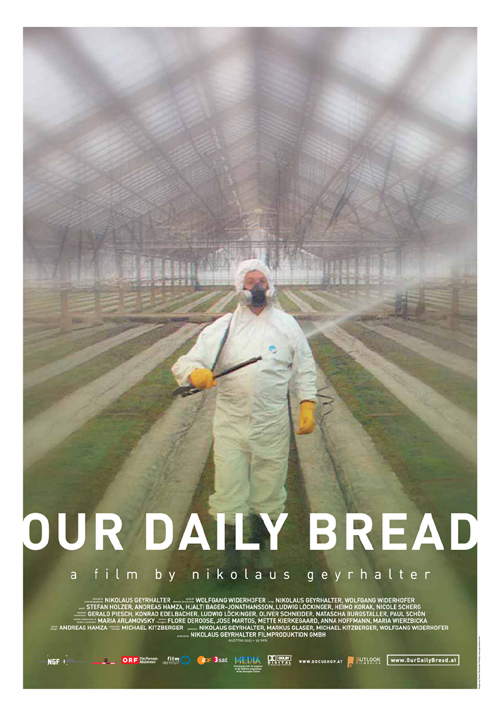
Friday Photography | Our Daily Bread & Manufactured Landscapes

Friday Photography enters the realm of moving pictures this Friday with two films meditating on our industrial interventions on the natural environment.

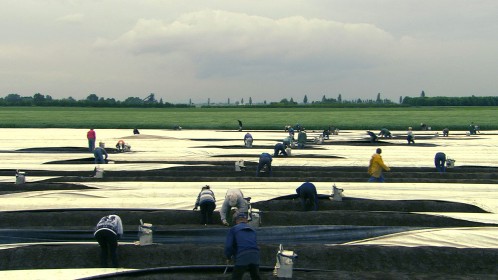
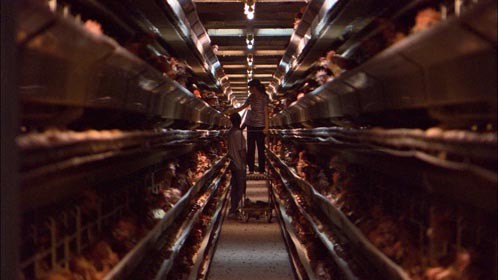
Our Daily Bread is a new film by director Nikolaus Geyrhalter. Described as a "meticulous and high-end film experience", the movie has no spoken prompts and no story line, just 21st century industrial agriculture at work. So far it doesn't look like there is a release planned for the Twin Cities (this makes me sad). Click here for a list of American release dates. [via Pruned]


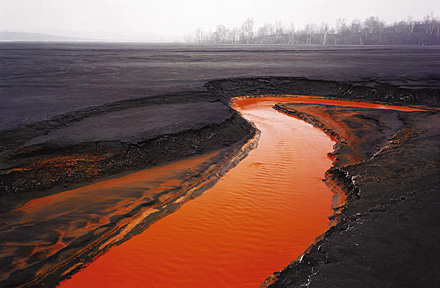
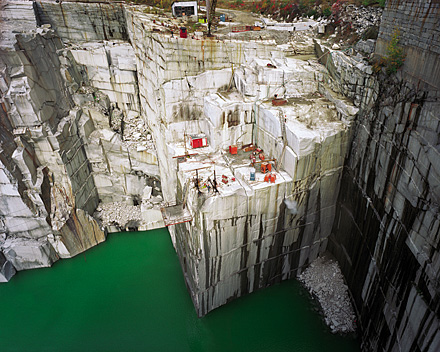
Manufactured Landscapes is a film by director Jennifer Baichwal about the life and work of photographer Edward Burtynsky. A BLYGAD favorite, Burtynsky's photographs are at once horrific, stunningly beautiful, and completely alien. You won't see your world the same way after spending time with his work. I can't wait to see his photographs on the big screen. Zeitgeist Films is has a US release planned for Summer 2007.


For more reading on industrial agriculture and more generally, the fascinating topics of eating, food, & where food comes from, see:

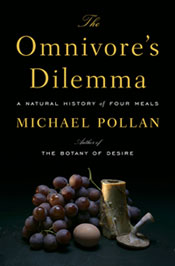
The Omnivore's Dilemma: A Natural History of Four Meals by Michael Pollan


Happy Friday!

Tuesday, November 21

Reality Tourism

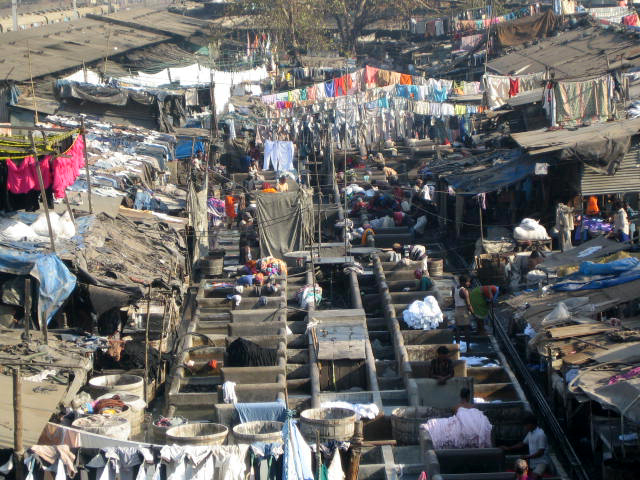
Continuing our series of tourism themed posts (here and here), Sandra from AFH San Diego drew my attention to a group called Reality Tours. Based out of Mumbai, India, Reality Tours offers 2 hour walking "Slum Tours" of the nearby city of Dharavi.


"In these small alleys, you will see why Dharavi is the heart of small scale industries in Mumbai (annual turnover is approximately US$ 665 million) and on the tour we show you a wide range of these activities- from making clay pots and leather bags to recycling plastic." - Reality Tours


The idea of a reality tour is not a new one. In 1989 a group called Global Exchange began with the idea that travel could be educational, fun, and positively influence international affairs. In their model, "... travelers are linked with activists and organizations from around the globe who are working toward positive change. We also hope to prompt participants to examine related issues in their own communities." Global Exchange sets each 7 to 14 day trip around a specific issue and focuses events around providing a view of the issue beyond what is communicated through mainstream media.
This type of trip offers a social exchange that you just can't get in a 2 hour walking tour, but both programs try to create a socially responsible experience, and both have been fairly well received in the international press.
Related Posts:
The Evolution of Eco-Tourism?
Friday Photography | Chernobyl Tourism

Saturday, November 18

Curbly.com | Love Where You Live

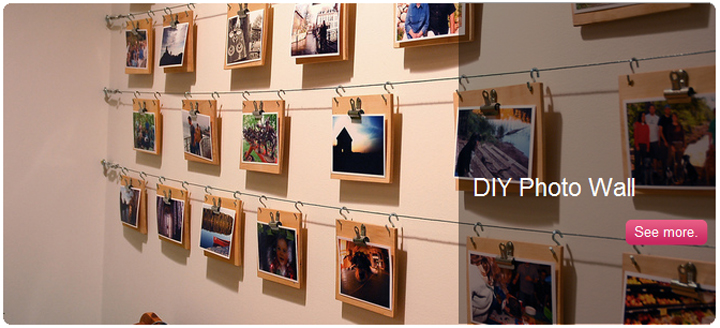
The only thing better then learning about something new is when it turns out to be not only cool, but local. That's why it's with much Twin City pride that I'd like to tell you about a new online community called Curbly.


According to co-founder Bruno Bornsztein, Curbly is a place where "people can share the creative stuff they've done with their homes, find inspiration for home-improvement projects, and get advice from experts."

Even as a fairly new website, they already have a ton of user-generated content: "The $3 Table", "Simple, Sustainable Living - 5 Easy Steps", "Kitsch Me Baby", and a multitude of other DIY tutorials drew me in instantly.


The DIY Photo Wall by Ben Edwards | just one of the many DIY tutorials at Curbly

All this on top of finally satisfying my voyeuristic fantasy of being able to peer into the living-rooms, bedrooms, bathrooms, and kitchens of complete strangers... Perfect!


So check it out, and keep your heads up for future Curbly/AFHMN collaborations.

Friday, November 17

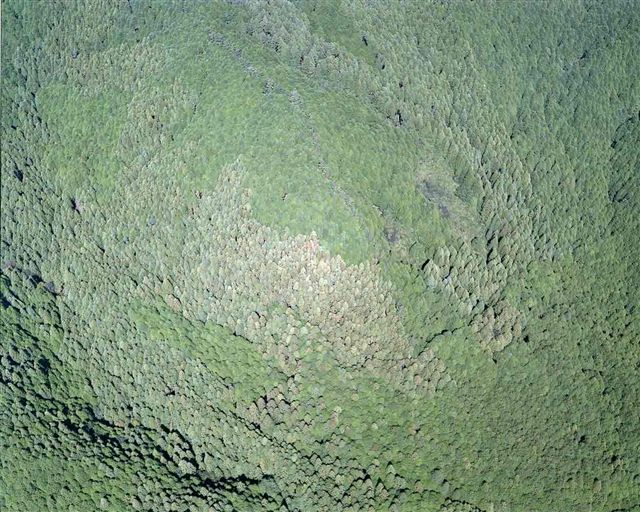
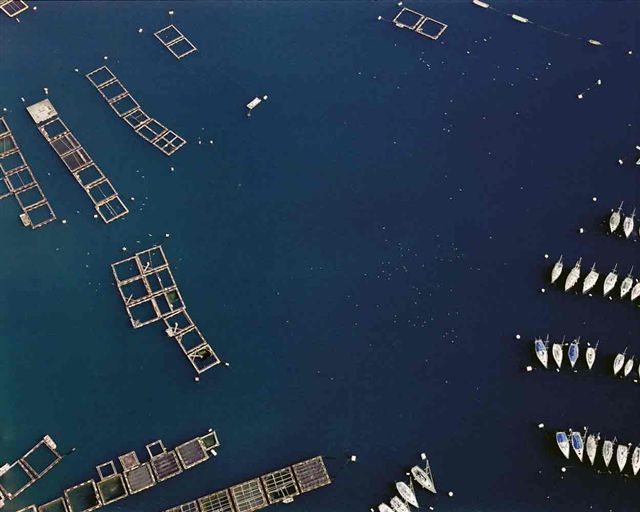
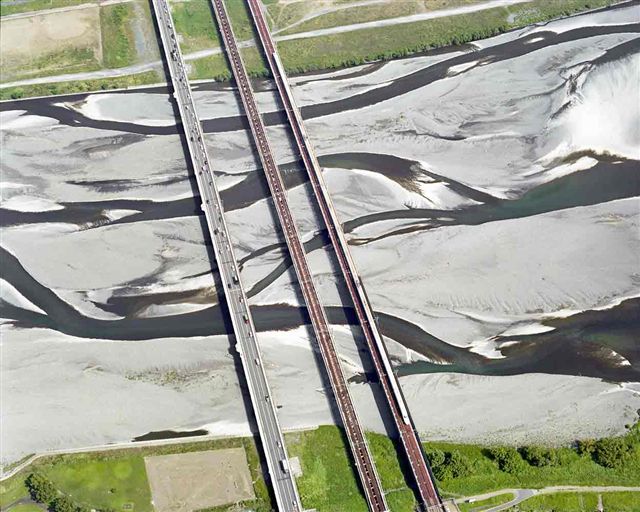
Friday Photography | Taiji Matsue & Murmansk Garage Culture

Only furthering my fascination with aerial photography, I discovered Taiji Matsue's work over at Pruned a couple of days ago. Described as "pieces from the surface of the earth", these beautiful compositions and many more can be found at L.A. Gallerie.


More information on Taiji:
artnet | take art collection | a biography

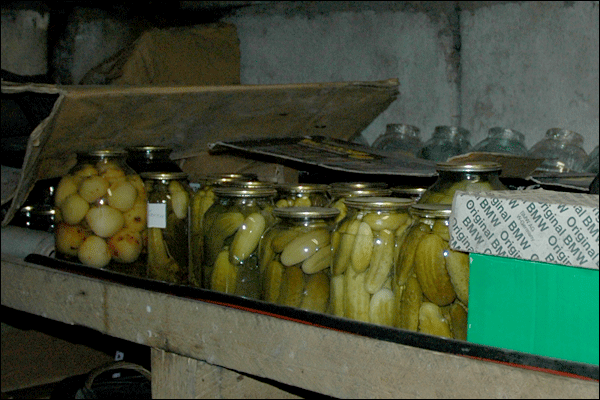
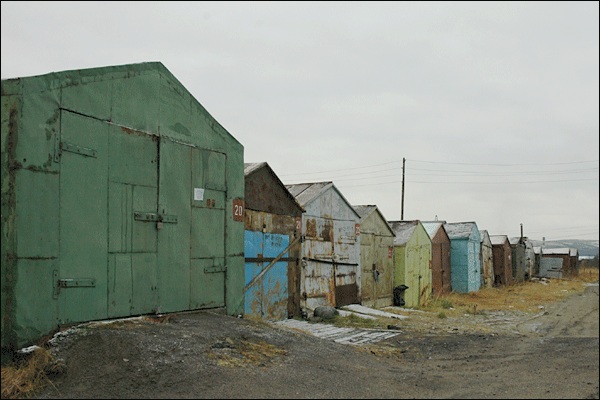
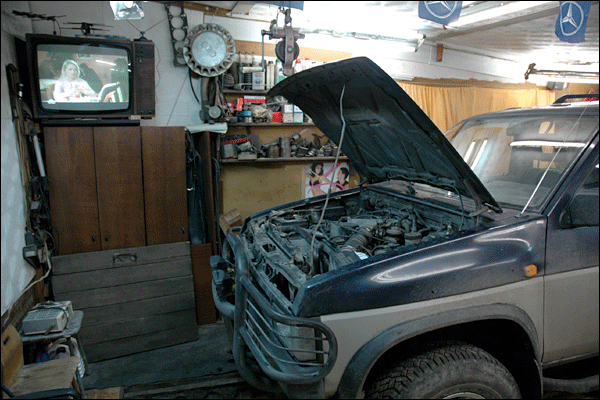
These great shots of garages in Murmansk, Russia were found on the BBC, In Pictures. Apparently there is a whole garage culture consisting of men, cars, and apparently… pickles. But what makes this unique is that these garages are all located in the a kind of garage-city located far away from the apartment blocks the men live in and therefore, one can only assume, the cares of everyday life. Their owners call them their 'sea shells'.


See the whole set, with commentary by the perplexed women of Murmansk, here. (Thanks Chris!)

Happy Friday!

Thursday, November 9

"Nature of Change" an Interdisciplinary Performance Art Benefit for Architecture for Humanity: Minnesota


AFHMN is happy to announce:

“Nature of Change” an Interdisciplinary Performance Art Benefit for Architecture for Humanity: Minnesota

Sunday, November 12, 2006 7:00pm – 8:30pm
$5 suggested donation
at The Center for Happiness
2645 SE 4th Street, Minneapolis, MN, 55414

Presented by The Center for Happiness & Project Educate, Entertain and Empower (Project EEE)… This performance is the culmination of a workshop at the Center for Happiness where participants shared, improvised, collaborated and experimented, interweaving meditation, movement, sound, visual arts, text, theatre and light focusing on the theme “Nature of Change”

The artists will present a series of short abstract vignettes, like visual poetry, to share their discoveries with the audience while inviting them to explore the theme in their own lives, providing a connection between entertainment and socio-political theatre.

With roots in both cabaret and Japanese style butoh (pictured above), the performance promises to be entertaining & provocative. And of course, all proceeds are going to a worthy cause.

Hope to see you there!

Wednesday, October 25

Massive Monthly | October

In an effort to keep BLYGAD readers in the AFH 'know', I'm rolling out the Massive Monthly, a monthly Architecture for Humanity news update that will usually correspond with the AFH monthly newsletter (of course, you could always just go straight to the source and sign up for the newsletter). So, with little time to waste, and a massive amount of news to cover, let's jump in:

AFH LOCAL CHAPTER NEWS
We're happy to welcome three new AFH local chapters to the family: Venice Beach California, Ames Iowa, and Austin Texas. In other chapter news, AFH San Francisco has a new website and is recruiting members. And, as always, You can find links to all of the AFH Local Chapters with a web presence in the sidebar to the right.

AFH INTERNATIONAL NEWS - THE OPEN ARCHITECTURE NETWORK
The Open Architecture Network is an idea on the grandest scale, it's also quite a mouthful to try and describe so I'm going to leave it up to the man behind it all, Cameron Sinclair:

"Since winning the TED Prize in March we've been working with a number of technology companies to develop a new community and gathering place for those interested in improving the built environment to collaborate, implement and research sustainable innovative projects and practices around the world. Architects, community groups, international NGOs and others could post their own projects, search and review the work of others, contribute to shared resources, collaborate with each other and access project management tools to help implement projects in the field. As a place that helps turn ideas into realizable projects, we are also looking into building user-generated content, materials, technologies, building codes, contracts and other resources. Coupled with this is an open licensing system developed through Creative Commons. We imagine a site that not only helps create, support and implement ideas, but also a place that fosters sustainable, replicable, adaptable and scalable design solutions. The network has a simple mission; to generate design opportunities that will improve living standards for all. We want to launch in 2007 so help us get it done."

And on the hush-hush, we've learned that a new AFH International website is in the works. And with it, a new graphic identity for AFH International. The new site will allow humanitarian designers and community groups to interact in new ways as the community expands, as well as offer a better showcase for all of the great projects going on across the world.

WORLDCHANGING AND DESIGN LIKE YOU GIVE A DAMN BOOK NEWS
Some of the hottest design world news at the moment is the release of WorldChanging.com's new book, aptly titled WorldChanging: A User's Guide for the 21st Century. It has a forward by Al Gore, and introduction by Bruce Sterling, and collection of ideas and writings from some of the smartest designers around the world, including AFH's own Cameron Sinclair.

The perfect companion piece to the WorldChanging book is of course the AFH book, Design Like you Give a Damn. And it has just entered it's second printing! Why I haven't mentioned the book here before is inexcusable, so if you haven't heard about it yet, do check it out, it's a beautiful book. With gift-giving season right around the corner, these are two great books to keep in mind for the socially conscious designer in your life.

RIBA GLOBAL WARMING COMPETITION
The Royal Institute of British Architects - USA announced a new international competition called 'Building A Sustainable World: Life in the Balance.' The competition brief calls for

"...a concept for a maximum capacity sustainable community or
an urban subdivision to address shifts in global climate, that have been so vividly demonstrated by increasing numbers of flooding and drought catastrophes."

The First Prize is $10,000. Download the full Competition text here.

AND FINALLY, AFHMN NEWS
Just one event to note at the moment. In support of the WorldChanging Book Tour, AFHMN will have some sort of presence at the Minneapolis tour stop. The event takes place on November 8th at the Kingman Studios in Northeast Minneapolis. It looks like it will be a great time.

"There'll be DJs. There'll be snacks and drinks. There'll be chances to meet and mingle with other folks doing worldchanging work in the Twin Cities. There will even be some surprise guests. In fact, we expect that this may be one of most enjoyable events of our entire tour. We hope you can make it!"

Check out the WorldChanging Tour: Minneapolis website here. For information on all WorldChanging Tour stops, check here.

---

Now that you're in the know, we'll return to our irregularly unscheduled content shortly.

Thursday, October 12

The Global Rich List


So just how rich are you?

If you're like me, you might not be used to thinking of yourself in those terms. And admittedly, it's not always that easy to do when some months you feel like you barely have enough to pay your bills, much less buy groceries, and much
much less go out for a drink or two on the weekends.

Well, since we all need a wake-up call now and again, Poke, a London based interactive media firm, created the Global Rich List. They write...

"We are obsessed with wealth. But we gauge how rich we are by looking upwards at those who have more than us. This makes us feel poor.

We wanted to do something which would help people understand, in real terms, where they stand globally. And make us realize that in fact most of us (who are able to view this web page) are in the privileged minority.

We want people to feel rich. And give some of their extra money to a worthwhile charity."


Go ahead, give it a shot... just how rich are you?

Friday, October 6

Friday Photography | USA by Air

This online photo journal documents a flight from California to Oshkosh, WI and back for the 2006 Oshkosh Airshow back in July. There are some truly fascinating photos here that really show the geography of the US in an unparalleled way.

See some interesting examples below, and just for kicks - I've keyed each geographic location or point of interest to it's corresponding Wikipedia page. Click the pictures to see a larger version.


The Great Salt Lake Desert (crossed in 30 minutes).


The Great Salt Lake... ever wonder what gives it that odd color? Just ask Wikipedia!

"...Dunaliella salina, a species of algae which releases beta-carotene, and halophilic bacteria which together give the water an unusual reddish or purplish color."

Aha!


A massive coal fired power plant.


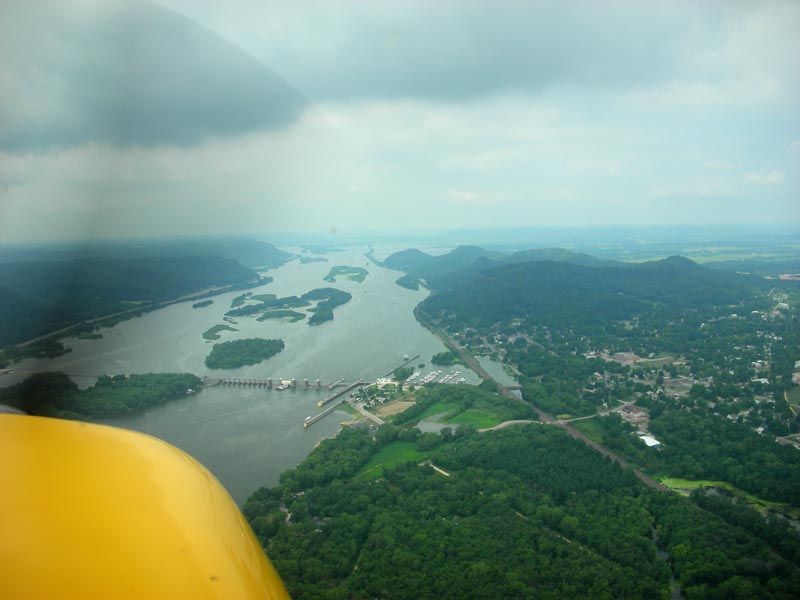
The mighty Mississippi River. This picture can't be taken too far from AFHMN's very own Twin Cities.


On the way back: Devils Tower.


And of course, what cross-country aerial adventure would be complete without a fly-over of Mount Rushmore? What an amazing photograph!

See the whole trip here, and have a great weekend!